ServicesFoundation Work
Foundation Work in East Flat Rock, NC
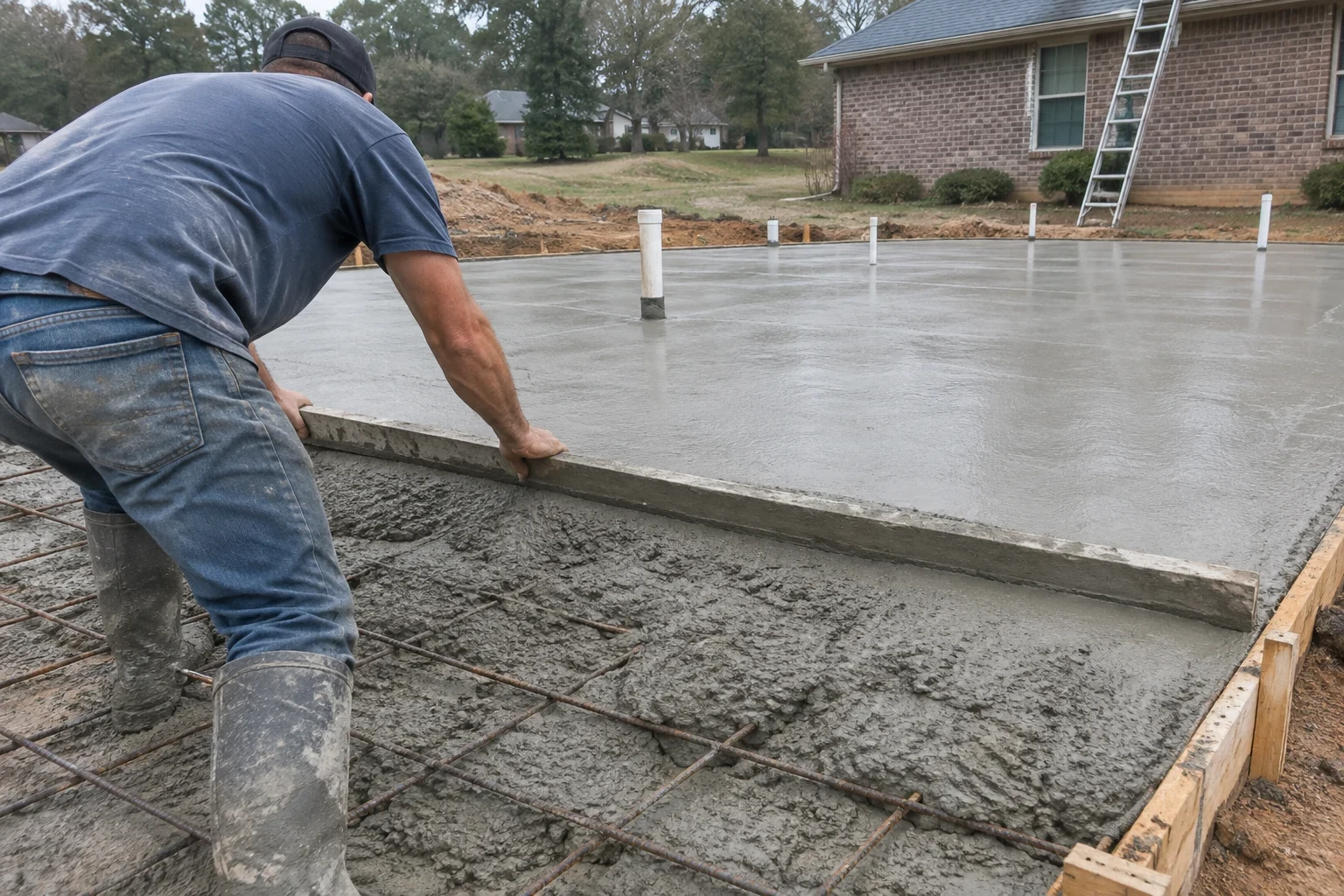
We build the footings, walls and slabs that carry a new custom home or addition, and we look at older foundations that are cracking or settling. Before anyone digs, you get a written scope that spells out the work and what could change the price.
A foundation planned on paper before it's poured
Everything above the foundation depends on it. Framing stays square, floors stay level and doors keep closing only if the footings and walls below were sized for the soil and the weight they carry. That's why we treat foundation work as the most important step of any build, not just the first one.
Most of our foundation work supports a custom home we're building or a room addition on an existing house. We also inspect foundations on older homes when owners notice cracks or sloping floors, and we tell you plainly if you're looking at a repair, a drainage correction or something that only needs watching.
Whatever the job, we write down the scope before work starts: the foundation type, the depth of the footings, the waterproofing and drainage, and the conditions that could change the cost. You know what you're paying for, and nothing gets added later without your say.
What Our Foundation Work Includes
- 01
Staking and digging
We mark the footprint from your floor plan, confirm it against setbacks and excavate to the depth the design requires. Dug soil is piled for backfill or hauled away, according to the written scope.
- 02
Footings matched to the soil
We form footings, set rebar and pour them below the frost line. Local clay is dense and holds water, so we watch width and drainage closely at this step.
- 03
Walls for crawl spaces, slabs or basements
We put up block or poured stem walls for crawl spaces, pour monolithic or stem-wall slabs, and build full basement walls on sloped lots that suit a walkout.
- 04
Keeping water out
Exterior damp-proofing or waterproofing on the walls, drain tile and gravel around the perimeter, and a clear route for water once it leaves the footing.
- 05
Foundations for additions
New footings connected correctly to the existing foundation and set at matching height, so the addition's floor meets the rest of the house evenly.
- 06
Backfilling and cleanup
After the walls cure, we backfill, slope the soil away from the house and leave the site ready for the framers.
Questions about Foundation Work?
Call(828) 567-3291Signs it's time to look at your foundation
Stair-step cracks in block walls
A crack that follows the mortar joints in a zigzag often points to settling. Hairline cracks are common, but ones that widen or let light through deserve a closer look.
Doors and windows that stick
When doors that used to close easily start rubbing at the top corner, the framing may be shifting with the foundation underneath.
Water or damp in the crawl space
Standing water, musty smells or wet insulation usually mean drainage around the footings isn't doing its job. Left alone, moisture can lead to rot in floor framing.
Floors that slope or bounce
A floor that dips toward one wall can be a settling footing or failing piers under the house.
You're planning a new home or addition
No warning signs needed here. If you own a lot or want more room, the foundation design is where your project really starts.
How a foundation job runs
- 1
Project consultation
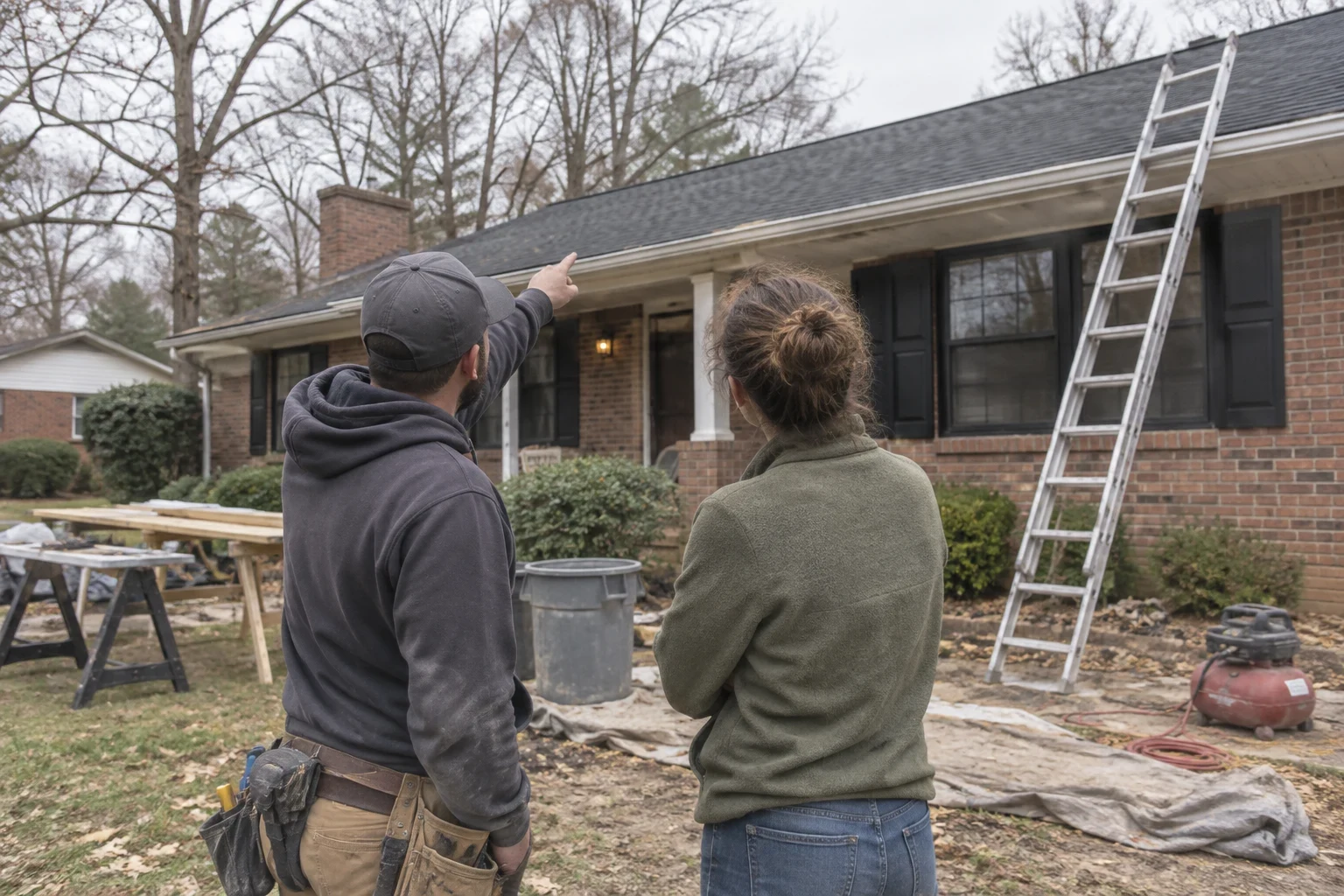
You call, we talk through the project, and we walk the lot or the existing house to see the slope, soil and access for ourselves.
- 2
Written scope and quote
We put the foundation type, dimensions, waterproofing and drainage in writing, along with the conditions that could change cost, like rock or unsuitable soil. You review it before anything is scheduled.
- 3
Permit, layout and digging
We pull the permit, stake the footprint and excavate. If the site needs land clearing or grading first, we handle that as part of the same plan.
- 4
Footing inspection and pour
The building inspector checks the trenches and rebar before concrete goes in. Walls or slab follow once footings have set.
- 5
Waterproofing, drains and backfill
We seal the walls, lay drain tile, backfill and slope the ground away from the house so water doesn't collect against it.
What moves the price of a foundation
Two foundations with the same footprint can cost quite different amounts depending on what's in the ground and how the house sits on the lot. We spell out each of these in the written quote so you can see where the money goes. If we find something underground that changes the work, we stop and talk with you before going further.
- Foundation type
- A slab uses less material than a crawl space, and a full basement uses the most. The right choice depends on your lot and how you plan to use the space.
- Slope and soil
- Steep lots need taller walls or stepped footings. Soft or wet soil can mean wider footings or extra stone.
- Rock and depth
- Hitting rock during excavation can slow digging or require breaking it out. We explain in writing how that would be handled and priced.
- Access to the site
- Narrow driveways or tight spots next to an existing house may limit equipment and add labor.
- Drainage and waterproofing
- Basements and below-grade walls need more waterproofing and drain work than a shallow crawl space.
Common Foundation Questions
Slab, crawl space or basement: which suits my lot?
That comes down to slope, soil and how you'll use the space. A flat lot often fits a slab or crawl space, and a sloped one can make a walkout basement sensible. We walk the property with you and lay out the pros and cons before you choose.
What if you find rock or poor soil?
Your written quote lists these conditions from the start and how each would be priced. If one turns up, we stop, show you and settle the next step together. Nothing is added to your bill before we talk.
Are permits and inspections included?
Yes. We get the building permit and book the footing and foundation inspections. No concrete is poured until the inspector approves the trenches and rebar.
What licensing and insurance do you have?
We're licensed and insured in NC and SC, so we can do foundation work on either side of the state line. We can review the paperwork with you at your consultation if you like.
Is there a warranty once the foundation is done?
Yes, it carries a 1-year warranty on workmanship. If an issue with our work appears in that first year, call us and we'll come back to fix it.
Do you repair cracks in an existing foundation?
First we track down the cause. Many cracks come from water pressure or bad drainage, and fixing that is part of the solution. We'll tell you straight whether it calls for a repair, a drainage fix or simply keeping an eye on it.
Start with a foundation you understand
Tell us about your lot, your addition or the crack that's been bothering you. We'll come out, look at the ground and put the scope in writing before any work begins.