ServicesLand Clearing
Land Clearing in East Flat Rock
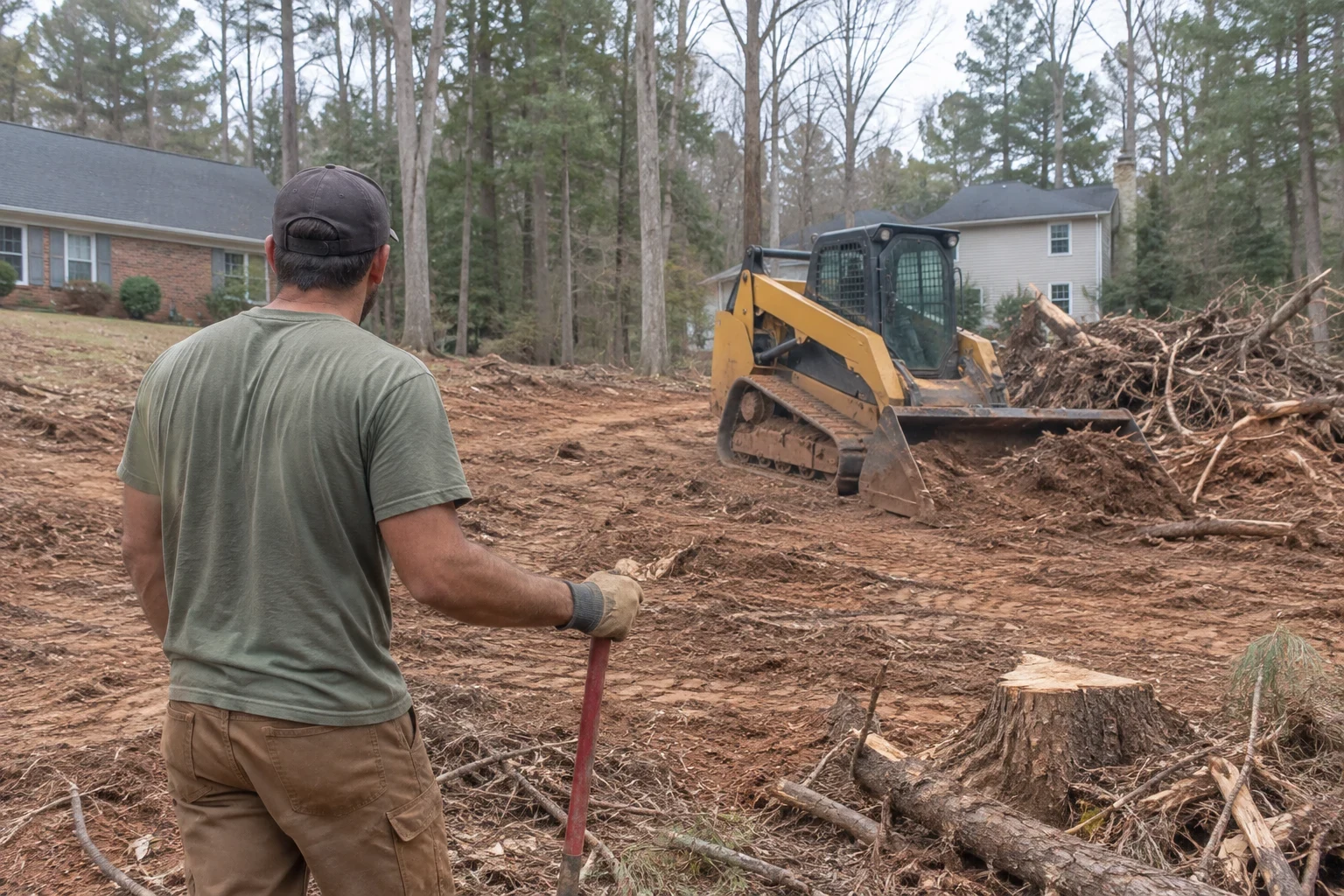
We take down trees, pull stumps and remove brush so your foundation, driveway and septic area can go where they belong. Before a single tree falls, you get a scope on paper listing what comes out, what stays, where the debris goes and what affects the price.
Site prep that starts with your floor plan
Opening up a wooded lot is the first real step of a build, and it sets up everything after it. We prep the ground to fit the house you plan: the footprint, a working margin for framing crews, the driveway route, the septic and well areas, and room for equipment to turn around. Taking out too little slows the build. Taking out too much costs you shade, privacy and the trees you may have bought the land for.
Most lots around East Flat Rock carry a mix of hardwoods, white pine and dense laurel or rhododendron, often on a slope with rocky soil. That mix is why we walk the property with you and flag trees together before we price anything. Then the scope goes on paper, so the number you see is tied to specific work instead of a guess.
We also prep ground for additions, detached garages and outbuildings on lots where a house already stands.
What the work covers
- Tree felling and removal
- We take down the marked trees and drop them away from structures, power lines and the trees you are keeping. Usable logs can be cut to length and stacked for firewood if you want them. Otherwise they leave with the rest of the debris.
- Stump removal or grinding
- Under a foundation or driveway, stumps come out completely, roots and all, because buried wood rots and leaves voids that can settle later. In yard areas, grinding below grade is often enough and costs less. Your scope spells out which method goes where.
- Brush and undergrowth
- Laurel, rhododendron, briars and saplings get cut and mulched or hauled away. Mulch can stay on site for paths or ground cover if you prefer.
- Debris disposal
- We spell out whether material is hauled off, chipped, or burned where local rules allow it. You will not find a surprise brush pile left at the edge of your lot.
- Erosion control
- Silt fence and other measures go in where bare soil could wash toward a creek, a road or a neighbor's property. On sloped lots, that matters the first time a heavy rain comes through.
- Protection for trees you keep
- Keeper trees are marked and, where practical, fenced at the drip line so equipment does not compact the roots or scar the trunk.
Signs your property is ready for site work
You have a house plan or footprint in mind
Once you know roughly where the house sits, the tree work can be planned around it instead of guessed at. We can work from your floor plan or help you stake a rough footprint on the ground.
Surveyors or soil evaluators can't get in
Boundary surveys, perc tests and soil evaluations all need access. If those crews can't reach the spots they need, some brush and tree work comes first.
Dead or leaning trees near the build site
A tree that looks fine today can come down on new framing during a storm. These are worth removing before construction starts.
Overgrowth crowding an existing home
Vines and saplings against the walls hold moisture, and limbs over the roof drop debris into gutters. Opening a buffer around the house is a smart first step before a remodel or new siding.
You need a driveway route or a view opened up
A driveway needs an open, drivable path for concrete and lumber trucks. Selective cutting can also open a view without stripping the whole hillside.
How a job runs from walk to finish
- 1
Walk the lot together
We meet you on the property, look at slope, access, soil and tree cover, and flag what comes down and what stays. Bring your questions and any plans or survey you have.
- 2
Scope and price on paper
You get a written quote listing the work area, the trees to remove, the stump method, the debris plan and any erosion measures. If something can't be known yet, such as rock below the surface, we note it and explain how it would be handled before you agree to anything.
- 3
Permits and utility locates
We request utility locates before any digging and check which permits or erosion control the job needs, then take care of that paperwork.
- 4
Cutting and hauling
Work usually goes in order: felling, brush, stumps, then hauling or chipping. We keep the road entrance clean as we go and stop to talk with you if anything turns up that changes the plan.
- 5
Final walk-through
We walk the site with you and check it against the agreed scope. Our workmanship carries a 1-year warranty, and the prepared lot is ready for grading and foundation work.
What sets the price of clearing a lot
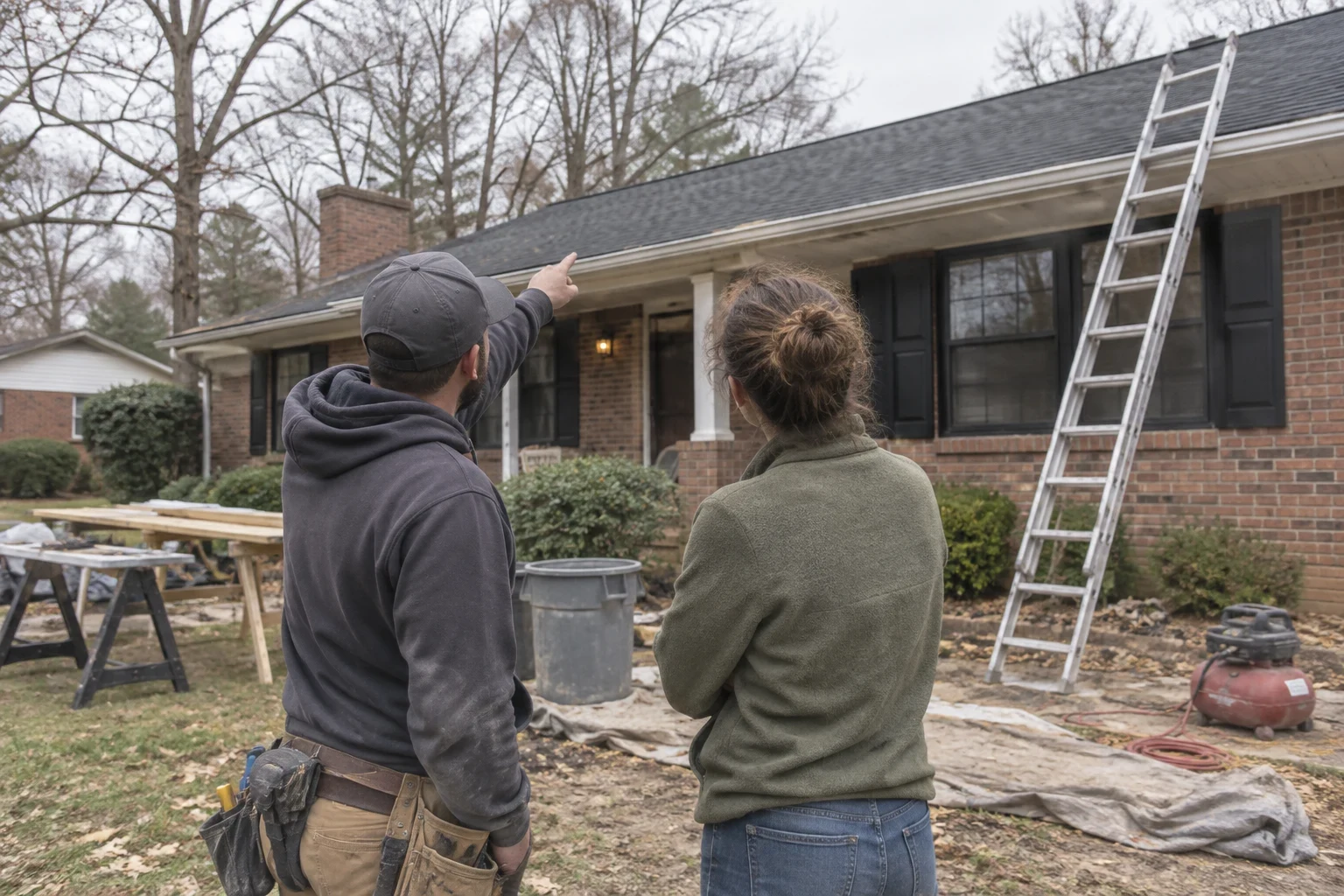
Prices swing widely between lots, so we never quote off an aerial view. Once we've walked the land, your written quote breaks the job into parts and shows what each depends on. If the scope has to shift after work begins, we discuss it with you and write the change down before doing it.
- Acreage and how thick it is
- Thinly spaced pines across an acre clear far quicker than half an acre packed with laurel and big oaks. How large the trees are counts as much as how many there are.
- Steepness and entry
- Steep slopes and narrow ways in mean smaller machines or more work by hand, and that adds time.
- What happens to stumps
- Pulling stumps fully under the building pad costs more than grinding them in the yard, and big hardwood stumps take the most work.
- Where the debris goes
- Trucking all of it away runs higher than chipping it on the lot or leaving cut firewood behind for you.
- Permits and keeping soil in place
- Larger cleared areas and land close to streams call for more silt fence, more stabilization and more paperwork.
Land clearing questions
Something not covered here? (828) 567-3291
Will my project need a permit or an erosion plan?
That comes down to the acreage you plan to disturb and how close it sits to streams or other water. In North Carolina, bigger disturbances can call for an approved erosion and sedimentation control plan, and stream buffers carry their own limits. We look into what your property needs and fold that work into the price before you sign off.
Can you save specific trees?
Yes. We flag keeper trees with you during the walk-through and protect them during work. We will tell you honestly if a tree sits too close to the foundation to survive construction, so you can decide with the full picture.
Do you carry the right credentials for this work?
Yes. We are licensed and insured in NC and SC. We're glad to go over the details during your project consultation.
What happens to the wood and brush?
You choose. We can haul it off, chip it for mulch, or cut logs to firewood length and stack them. Your choice goes into the scope so the price reflects it.
Can you handle the next steps after the lot is opened up?
Yes. We also do grading and foundation work, and we build custom homes. Keeping those steps with one crew means the lot is prepped with the next stage already in mind.
How long does the work take?
That depends on lot size, density, slope and weather, since wet ground can stop heavy equipment. We include an estimated schedule with your quote and keep you posted if rain pushes it back.
Walk the property with us
Describe your land and the house you have in mind, and we'll meet you there for a project consultation. You'll then receive a written quote laying out the whole scope, with nothing extra tucked inside.